
In the development lifecycle of an electronic atomizer, the vast majority of issues that lead to cost overruns, launch delays, and quality problems can be traced back to the initial design phase. A seemingly minor design flaw can see its repair costs grow exponentially once it enters mass production. Therefore, Design for Manufacturing (DFM) is not an option but the cornerstone of building a successful product. It is a systematic engineering practice aimed at ensuring that a product design, while meeting functional requirements, can be mass-produced at the lowest cost, with the highest efficiency, and the most reliable quality.
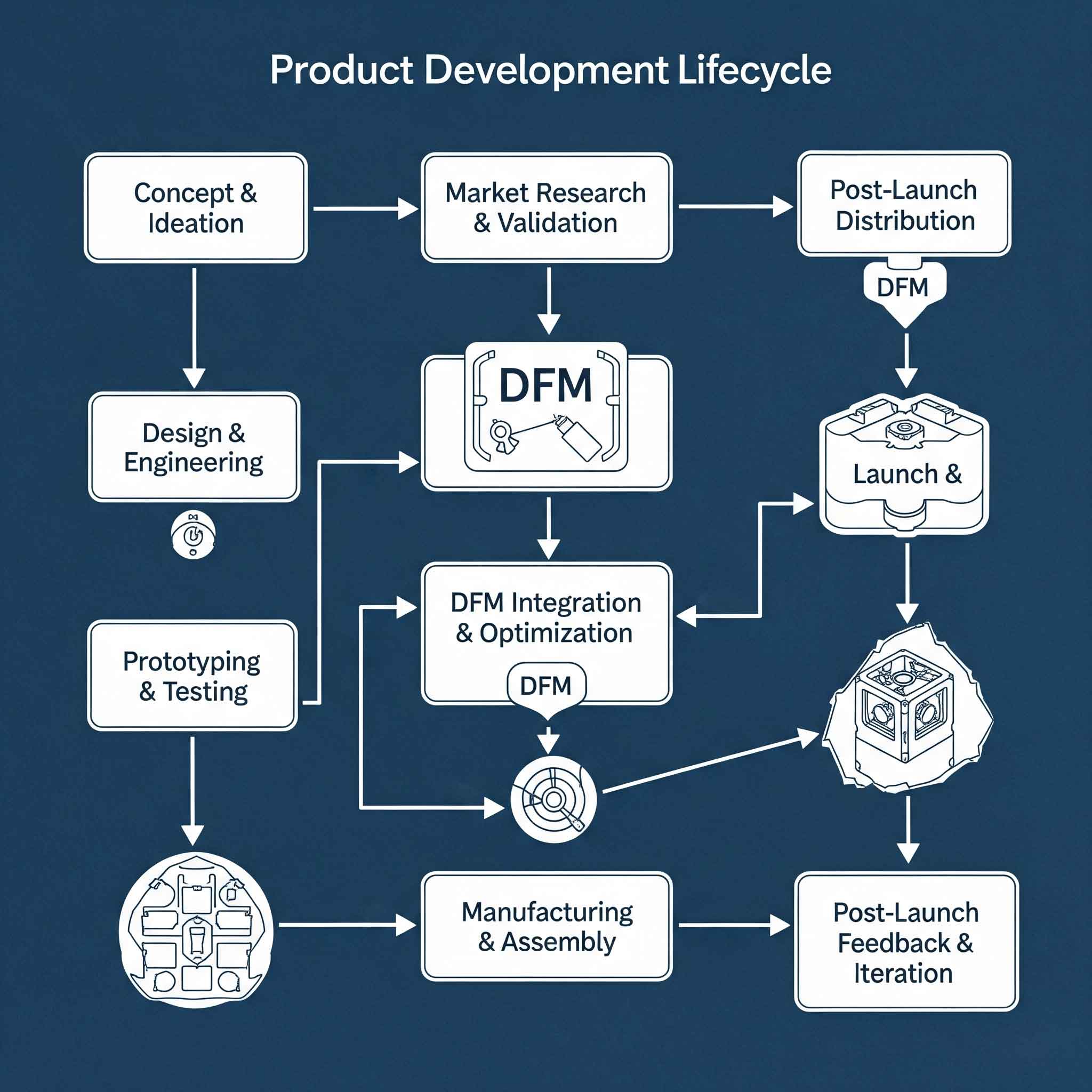
The implementation of DFM permeates every detail of product design, with its core lying in simplifying subsequent manufacturing processes through forward-thinking design decisions.
● Component Simplification and Standardization: One of the primary principles of DFM is to minimize the number of unique components in a product and prioritize the use of standardized, common parts. This strategy significantly simplifies product design and reduces the complexity of the assembly process. More importantly, it greatly optimizes the procurement process, enhances the stability of material supply, and ensures a high degree of consistency between different product batches. This not only directly reduces material and management costs but also lays a solid foundation for supply chain resilience.
● PCB Layout Optimization: The Printed Circuit Board (PCB) is the core of any electronic product. The DFM process involves a rigorous review of the PCB design, focusing on key parameters such as minimum trace width, solder mask clearance, and copper pad spacing to prevent potential connection issues and short-circuit risks. Additionally, optimizing component layout can effectively reduce signal interference and improve the product's thermal management performance, which is crucial for ensuring the long-term stable operation of precision devices like electronic atomizers.
● Design for Testability (DFT): A product that cannot be tested efficiently and accurately cannot have its quality guaranteed. DFT emphasizes the need to plan for subsequent production testing from the very beginning of the design process. This includes reserving sufficient test points on the PCB to facilitate In-Circuit Testing (ICT) and Functional Testing (FCT). By integrating testability into the design, companies can quickly and cost-effectively screen out defective products during production, thereby significantly reducing losses due to quality issues.
Viewing DFM as an upfront cost is a shortsighted perspective; in reality, it is a strategic investment that yields substantial returns.
● Cost Control: DFM controls production costs at the source by optimizing material usage, simplifying assembly processes, and preventing manufacturing defects. Correcting an error in the design phase might only require a few hours of engineering time, whereas the same error, once in mass production, could lead to the rework of tens of thousands of products, material scrappage, and production line stoppages, resulting in incalculable losses.
● Accelerated Time-to-Market: By identifying and resolving potential manufacturing challenges early in the design stage, DFM effectively avoids various unforeseen issues and delays that might occur during production. This makes the transition from prototype validation to mass production smoother and faster, helping brands seize market opportunities.
● Ensuring Quality and Consistency in Scaled Production: A design that has been thoroughly optimized through DFM possesses inherent scalability. It ensures that the product maintains a uniform quality standard and performance, whether in small trial runs of a few hundred units or in large-scale production of millions. For any brand with market ambitions, this predictability and reliability are fundamental to its business growth.
On a deeper level, the value of DFM transcends the purely engineering domain. For instance, the design principle of component standardization is, in itself, a powerful supply chain management tool. Standardized components typically have broader supply channels and multiple qualified suppliers, which directly reduces the risk of dependency on a single source, aligning perfectly with the supply chain management goal of avoiding "single points of failure". The assessment of component availability during a DFM review effectively acts as an early warning system for supply chain risks, enabling a company to foresee and address potential material shortages months before production begins. This elevates DFM from a tactical engineering task to a strategic pillar for ensuring supply chain resilience.
Furthermore, the manner in which a manufacturing partner executes DFM indirectly reflects the health of its internal organization. Effective DFM requires seamless collaboration among multiple departments, including design, manufacturing, and procurement. A supplier that can demonstrate a fluid, integrated DFM process inevitably possesses mature internal communication mechanisms, cross-functional teamwork capabilities, and a process-driven corporate culture. For B2B clients, this is a crucial indicator for evaluating a partner's reliability. Companies with rigid internal silos and a lack of inter-departmental cooperation will inevitably encounter significant obstacles when implementing DFM, ultimately leading to the very delays and quality issues that DFM is meant to solve. Therefore, when assessing potential partners, it is essential not only to ask if they do DFM but to delve deeper into how they do DFM, seeking evidence of their organizational excellence.